
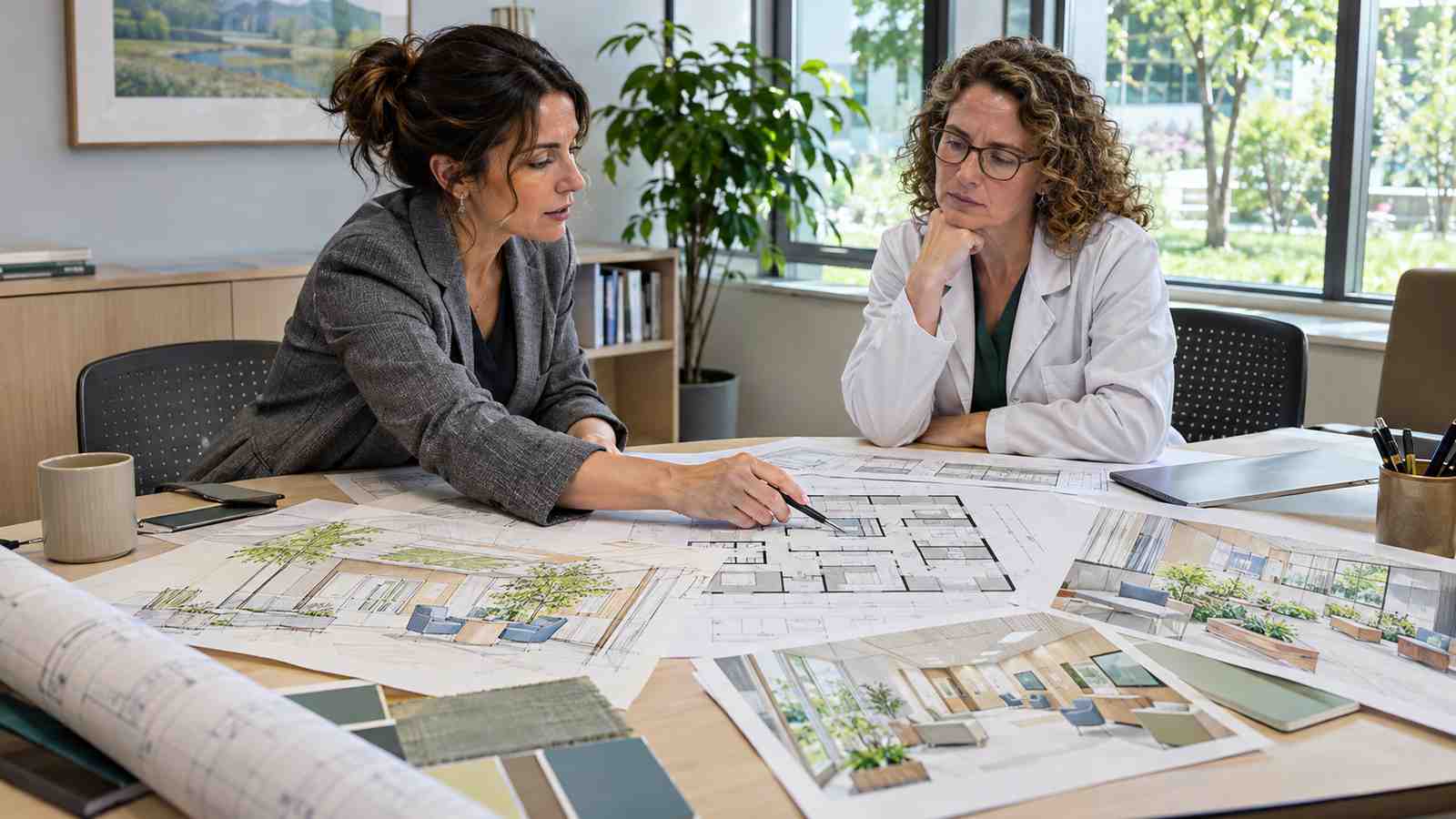
Mental health treatment environments can influence how patients experience care. Room layouts, lighting, furniture, and access to personal space may affect comfort, stress, and feelings of independence. Research published in the Journal of Psychiatric Research suggests that psychiatric hospital design can support emotional well-being by improving privacy, social interaction, and patients’ sense of control. These findings raise an important question: how can facilities provide necessary protection without creating spaces that feel restrictive or unwelcoming?
Designing psychiatric care environments requires careful decisions about safety equipment, building materials, and therapeutic spaces. Manufacturers such as ProEnc LLC develop protective fixtures, including ligature-resistant television enclosures and secure noticeboards for behavioral health settings. Such products illustrate one part of a larger design challenge. Facilities must consider how protective features work alongside comfortable surroundings, meaningful activities, and opportunities for personal independence.
Why Physical Safety Remains a Primary Concern
Psychiatric facilities care for people with different conditions, needs, and levels of vulnerability. Some patients may experience severe emotional distress, confusion, or an increased risk of self-harm. Consequently, certain treatment areas require environmental safeguards that go beyond those found in conventional hospitals.
The Joint Commission identifies environmental risk assessment as an important part of suicide prevention in psychiatric hospitals. Its guidance emphasizes identifying and reducing hazards that patients could potentially use to harm themselves.
Common protective measures include:
- Ligature-resistant fixtures that reduce potential attachment points.
- Reinforced furniture designed to withstand damage or misuse.
- Restricted access to hazardous objects and equipment.
- Secure television housings, doors, and other wall-mounted fixtures.
- Regular environmental inspections and maintenance procedures.
These precautions serve a practical purpose. A facility may have compassionate staff and effective treatment programs, yet environmental hazards can still create preventable risks.
However, physical safety measures cannot replace clinical observation, individualized risk assessments, or appropriate staffing. Protective design works best when integrated into a broader patient safety system.
Can a Psychiatric Facility Feel More Like Home?
Another perspective focuses on the emotional experience of patients receiving treatment. Psychiatric hospitalization can involve unfamiliar routines, limited privacy, and separation from everyday surroundings. An overly institutional environment may intensify feelings of discomfort or powerlessness.
A systematic literature review published in HERD: Health Environments Research & Design Journal examined 44 studies concerning mental health facility design. The researchers identified several potentially beneficial features, including daylight, personal privacy, comfortable communal spaces, artwork, and opportunities for social interaction.
How Therapeutic Design Supports Daily Life
Therapeutic design considers how patients use their surroundings throughout the day. Rather than focusing exclusively on preventing accidents, it explores ways to make treatment environments supportive and welcoming.
Natural lighting can make indoor spaces more pleasant. Comfortable seating encourages patients to spend time in shared areas. Quiet rooms provide opportunities for reflection, while recreational spaces support structured activities and social engagement.
Access to gardens or outdoor areas may offer additional opportunities for relaxation and movement. Privacy also matters, particularly when patients need personal space or wish to communicate with family members.
The World Health Organization emphasizes dignity, accessibility, and welcoming environments in its guidance on mental health services. These principles support treating patients as individuals rather than viewing them primarily through the risks associated with their conditions.
Where Protective Design and Patient Comfort Conflict
Although both perspectives prioritize patient welfare, their practical requirements sometimes differ.
A comfortable sofa may create safety concerns if its components can be removed. Decorative fixtures may introduce hazards when installed without suitable precautions. Large windows can improve natural lighting, but their placement and construction require careful assessment.
Meanwhile, strict restrictions may affect how patients experience treatment. Locked storage, limited access to personal belongings, and highly controlled surroundings can reduce opportunities for independence.
The relationship between physical comfort and mental well-being is also relevant across other areas of healthcare, where treatment decisions, personal confidence, and perceived risks can influence emotional experiences.
Psychiatric facilities must therefore consider how safety measures affect patients’ dignity, comfort, and sense of control.
Research summarized in the Indian Journal of Psychiatry indicates that environmental features, including privacy, lighting, and the symbolic meaning of institutional spaces, may influence patients’ psychological experiences.
The challenge is therefore more complicated than choosing between comfort and protection. A design decision that reduces one risk may introduce another concern related to dignity, stress, or daily functioning.
What Changes When Safety and Comfort Are Designed Together?
A more balanced approach considers protective requirements during the earliest planning stages. Architects, clinical teams, safety specialists, and facility managers can work together to identify practical solutions.
For example, televisions can be installed within protective housings while remaining available for supervised recreational activities. Secure furniture can incorporate comfortable materials and welcoming colors. Windows can support daylight access while meeting appropriate safety requirements.
This approach allows specialized equipment to serve its intended function without defining the appearance of the entire facility.
Practical Priorities for Facility Planning
Several considerations can help decision-makers balance competing needs:
- Individual risk levels: Match environmental precautions to the intended patient population and clinical setting.
- Patient participation: Gather feedback about comfort, privacy, accessibility, and daily activities.
- Staff visibility: Support appropriate observation without unnecessarily compromising personal dignity.
- Flexible spaces: Provide areas for recreation, social interaction, and quiet reflection.
- Ongoing evaluation: Review safety incidents, patient experiences, and maintenance needs.
These priorities recognize that psychiatric facilities are active treatment environments. Their design must accommodate changing clinical needs rather than follow a single rigid model.
Building Environments That Support Recovery
Patient safety and emotional well-being should be complementary goals in psychiatric facility planning. Protective equipment addresses identifiable physical hazards, while therapeutic design helps create surroundings that respect comfort, autonomy, and dignity.
Neither approach is sufficient when considered independently. An inviting environment still requires appropriate safeguards, while a highly secure facility must remain sensitive to patients’ emotional experiences.
Future psychiatric facility design should therefore emphasize collaboration, evidence-based planning, and regular evaluation. By considering physical protection and human experience together, healthcare organizations can develop spaces that support safer, more respectful mental health care.